
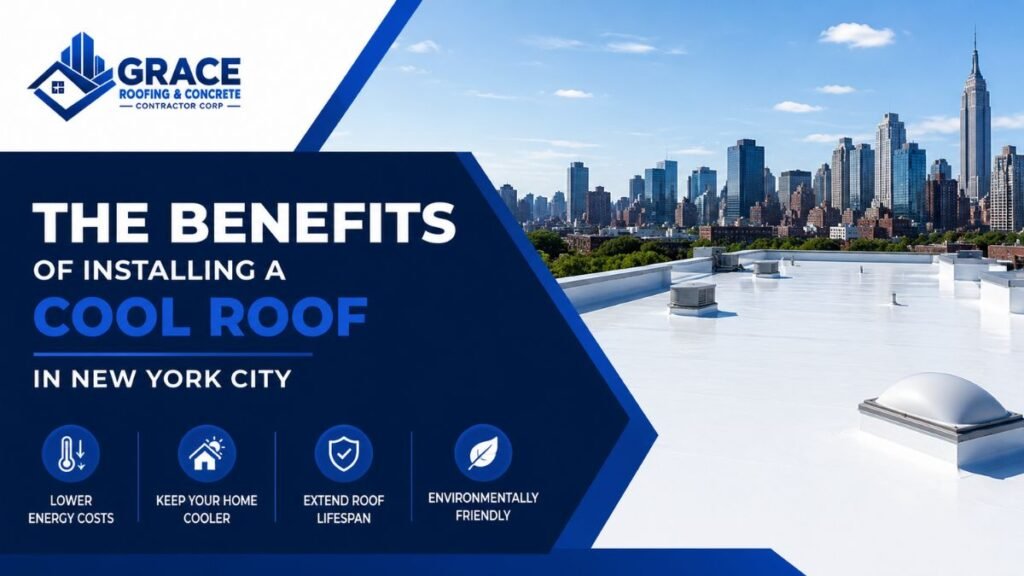
Stand on a black tar roof in the Bronx on a July afternoon and you can feel the problem through your shoes, the surface can run 50 to 90 degrees hotter than the air. All that heat pours straight into the top floor below. A cool roof flips that equation. By reflecting sunlight instead of soaking it up, a reflective roof keeps the building cooler, cuts the AC bill. Lasts longer, which is why New York City has made cool roofs a citywide priority.
This guide covers what a cool roof actually does, the specific benefits for NYC buildings, the free NYC Cool Roofs program many owners don’t know exists. How a reflective surface fits into your overall roofing plan. It’s part of our flat roof waterproofing and maintenance guide; here we focus on the reflective upgrade and why, in this city, it pays for itself.
What Is a Cool Roof?
A cool roof is any roofing surface engineered to reflect more sunlight and absorb less heat than a standard dark roof. That can mean a white reflective membrane like TPO, or, most commonly for existing roofs, a white reflective coating applied over the current surface. The coating is the reason cool roofs are so accessible: you don’t need a new roof, just a sound one to coat.
The physics is simple. A dark roof absorbs most of the solar energy hitting it and radiates that heat into the building. A reflective white surface bounces much of it back to the sky, so far less heat ever enters. In a dense, sun-baked city, that difference adds up fast.
Benefit 1: Lower Cooling Costs
This is the benefit owners feel in their wallet. By keeping the roof surface and the space below it cooler, a cool roof cuts the cooling load on air conditioning. Installing a cool roof can reduce cooling costs by roughly 7–15%. Reflective coatings can lower internal building temperatures by up to 30% during peak summer.
For a top-floor apartment or a small commercial space under a flat roof, that’s the difference between an AC that cycles comfortably and one that runs flat-out all August.
Benefit 2: A Cooler, Healthier Interior
Not every NYC building has central air, and in those buildings a cool roof is a genuine health measure, not just a comfort upgrade. In non-air-conditioned residential buildings, cool roofs can lower maximum indoor temperatures by 2. 2 to 5. 9°F. During a heat wave, several degrees indoors is the margin that matters for the elderly, children, and anyone medically vulnerable to heat.
Benefit 3: A Longer-Lasting Roof
Heat is what ages a roof. The daily expansion and contraction of a membrane baking under the sun fatigues seams and breaks down materials over years. By holding the surface temperature down, a reflective coating reduces that thermal stress, extending the life of both the roof membrane and the rooftop cooling equipment that no longer works as hard. A cool roof is, in effect, a maintenance investment that slows the whole system’s wear. It pairs naturally with the maintenance practices in our flat roof maintenance guide.
Benefit 4: Fighting the Urban Heat Island
NYC runs measurably hotter than its surroundings, up to five degrees hotter, because dark roofs and pavement absorb heat and there’s little vegetation to offset it. This “urban heat island” effect intensifies heat waves and drives up citywide energy demand. Every reflective roof is a small piece of the fix. There’s a climate dividend too: every 2,500 square feet of roof coated can cut the city’s carbon footprint by about one ton of CO2, since reflective roofs reduce the power demand that produces emissions.
The NYC CoolRoofs Program: Free or Low-Cost Installation
Many building owners don’t realize the city runs a program to coat roofs at little or no cost. NYC CoolRoofs helps building owners, especially nonprofits and affordable-housing properties, get reflective coatings installed, often free, while training New Yorkers in roofing skills. If your building qualifies, it’s one of the rare cases where an energy upgrade costs almost nothing upfront. Even buildings that don’t qualify benefit from the same reflective coating as a straightforward paid upgrade.
Is a Cool Roof Right for Your Building?
A cool roof makes the most sense when:
Your top floor overheats in summer or your AC bills spike July–September.
Your existing flat roof is structurally sound, a coating restores and reflects, but it can’t fix a failing roof. A moisture inspection comes first.
You want to extend the life of an aging-but-intact membrane than replace it now.
It’s worth weighing a reflective coating against a new reflective membrane like TPO. If you’re already choosing a new roof, compare the options in our breakdown of EPDM, TPO. Torch-down roofing, TPO delivers cool-roof reflectivity as a full new system, while a coating brings the same benefit to a roof you’re keeping.
One caution: reflectivity is only half the job. A cool coating over unaddressed seam or flashing problems just makes a leaking roof white. The waterproofing has to be sound first, which is why cool-roof work and a proper inspection go together.
Frequently Asked Questions
How much can a cool roof save on cooling bills in NYC?
Cool roofs typically cut cooling costs by about 7–15% and can lower internal building temperatures by up to 30% at peak. Actual savings depend on your building, insulation, and how hard your AC works, but top-floor spaces under flat roofs see the biggest difference.
Does NYC install cool roofs for free?
Through the NYC CoolRoofs program, yes, qualifying buildings, especially nonprofits and affordable housing, can get reflective coatings installed at little or no cost. Buildings that don’t qualify can still get the same coating as an affordable paid upgrade.
Will a cool roof help if my building has no air conditioning?
Yes. In non-air-conditioned buildings, cool roofs can lower maximum indoor temperatures by roughly 2. 2 to 5. 9°F. During heat waves that reduction is a meaningful health benefit for vulnerable residents, not just added comfort.
Can any flat roof be made into a cool roof?
Most sound flat roofs can be coated with a reflective membrane, but the roof must be structurally sound and watertight first. A coating over a failing roof doesn’t fix leaks. An inspection confirms whether your roof is ready for a reflective coating.
Does a cool roof last longer than a regular roof?
A reflective surface reduces the thermal stress that ages roofing, so it can extend the life of the membrane and the cooling equipment below. Combined with regular maintenance, a cool roof both saves energy and slows the roof’s overall wear.
The Bottom Line
In a city that runs hotter than everywhere around it, a cool roof is one of the highest-return moves a building owner can make: lower bills, a cooler and safer interior, a longer-lasting roof. A real dent in the urban heat island, sometimes at no upfront cost through NYC CoolRoofs. The one rule: make sure the roof underneath is sound before you coat it.
Want to know if your roof is a candidate for a reflective coating? Grace Roofing & Concrete Contractor Corp has coated and waterproofed NYC flat roofs for 16+ years. Call +1 (646) 688-8222 for an inspection and honest recommendation.